

For years, the workplace has been seen as a strictly professional space where humor does not belong. Most assume that keeping a straight face is the secret to team efficiency and productivity. Yet both research and real-life experience reveal that adding humor in the workplace help employees thrive by reducing stress, building psychological resilience, and managing emotional responses.
In fact, a study published in The Japanese Journal of Psychology found that employees who used humor more often reported better physical and mental health, as well as stronger self-rated job performance.
People often overlook how humor can turn strangers into teammates and make daily interactions more enjoyable. This shows that humor is a simple yet effective way to spark friendships and create a relaxed, friendly atmosphere where employees can bond naturally.
Today’s organizations also see humor as a practical tool anyone can use, anytime, anywhere. Unlike other stress-relief methods that need training, laughter is always within reach and can lighten the mood in an instant.
Not only that, but humor also supports organizational communication. It can help new employees adjust more easily, build a sense of belonging, and strengthen team relationships.
In this blog, we will explore the psychological effects of humor, how it helps reduce workplace stress and anxiety, and how employees can use it in healthy and respectful ways.
The Psychology of Humor
According to research in psychology, humor is more than just telling jokes or making people laugh. It is a broad concept that includes actions, speech, or writing that create amusement and fun.
It also includes the mental process of creating humor, understanding why something is funny, and the positive feelings people experience when they enjoy it. In the workplace, it can improve mood and help people deal with challenges in a healthier way.
Over time, psychologists have developed different theories to explain why people find things funny and how humor affects behavior.
Relief Theory: Humor as Stress Release
This theory suggests that humor helps release built-up psychological tension and stress. When people feel pressure, laughter can serve as a healthy emotional outlet.
It often works like a pressure valve by letting out nervous energy and emotional strain. This is one reason people may laugh during stressful or uncomfortable moments.
Humor can also create helpful physical responses, such as:
- Deeper breathing
- Muscle relaxation
- Reduced physical tension
- A calmer emotional state
Superiority Theory: Humor as Self-Enhancement
It suggests that some humor comes from feeling better than others. People may laugh at mistakes, awkward moments, or someone else’s misfortune.
This kind of humor can sometimes give a short boost to self-esteem or confidence. However, it is not always positive. If used carelessly, it can embarrass others, damage trust, and create tension in the workplace.
Incongruity Theory: Humor as Surprise
Incongruity Theory explains humor as the result of surprise. People expect one outcome, but something different happens instead.
The brain quickly notices this mismatch, and the unexpected twist creates amusement or laughter. This is common in wordplay, witty comments, and funny situations. In the workplace, this kind of humor is often light, creative, and less harmful when used respectfully.
How Humor Reduces Stress and Anxiety in the Workplace
During busy workdays or difficult moments, sometimes what a workplace needs is a little laughter to bring relief and positivity. But what many people may not realize is that humor can also help the mind and body respond to stress and anxiety in healthier ways. Here are some of the ways it helps:
Triggers Positive Emotional Responses
When people laugh genuinely, the brain releases chemicals linked to positive feelings. These include dopamine, endorphins, oxytocin, and serotonin. At the same time, stress hormones like cortisol decrease.
This shift helps the nervous system move from a state of tension to a more relaxed state. Instead of staying on high alert, the body gets a chance to recover from ongoing stress.
Reframes Negative Thoughts
Humor can also help people look at stressful situations from a different angle. A small moment of laughter may make a problem feel less overwhelming and easier to manage.
It can interrupt cycles of overthinking and worry. When the mind sees a situation in a lighter way, the body often receives signals that it is safe to relax. This can help reduce feelings of anxiety.
Promotes Emotional Regulation
Humor can make it easier to manage emotions during pressure-filled moments. It helps lower negative feelings such as frustration, irritation, or tension, which allows people to respond more thoughtfully.
Instead of reacting quickly out of stress, employees may find it easier to stay calm and communicate clearly.
Laughter also supports physical relaxation by stimulating blood circulation. This can create a calming sensation that helps release tension and reduce stress.
The Impact of Humor on Workplace Mental Health
Bringing humor into everyday work can have a strong effect on mental health. Small moments of laughter can distract people from the stressful things happening. Over time, these positive moments can make work feel more manageable.
Reduces Burnout and Emotional Fatigue
Burnout and emotional fatigue often happens when stress builds up for a long time without enough recovery. But humor can help reduce burnout and re-engage employees by giving them short mental breaks during busy and tiring days.
Some benefits include:
- Less mental exhaustion
- Better stress recovery
- Improved energy levels
- Greater emotional balance
Even a brief lighthearted moment during a stressful week can help people cope better and return to tasks with more energy.
Improves Mood
Laughing activates the brain’s reward system, which supports positive emotions. This can help lift mood and reduce feelings linked to sadness or discouragement. When employees feel better emotionally, they are often more focused, patient, and motivated at work.
Regular moments of humor can help create a workplace atmosphere that feels more positive and welcoming, less tense, and more enjoyable for everyone.
Strengthens Team Relationships
In a recent survey, 95% of people said that laughter helps them feel more connected to their coworkers. This shows how humor remains one of the fastest ways to build rapport, especially in team settings where trust and collaboration matter. As employees feel more connected, teamwork often improves and day-to-day relationships become stronger.
Humor also encourages the release of oxytocin, a chemical linked to trust and connection, which helps employees feel more comfortable with one another and find more common ground.
Enhances Psychological Safety
Employees who experience humor in their work environment often see it as more psychologically safe. It also reduces the sense of hierarchy between leaders and employees. Their interactions feel warmer and more approachable, which helps make people feel more comfortable around one another.
When leaders and team members use light, respectful humor, the workplace can feel less rigid and more open. This encourages employees to:
- Share ideas more freely without fear of judgment
- Ask questions more openly without hesitation
- Learn from mistakes without feeling embarrassed
- Join honest discussions without holding back
- Participate more actively in team conversations
Positive vs Negative Humor
Not all humor has the same effect in the workplace. Some types of humor help people feel connected and supported, while others can create stress and discomfort. Understanding the difference can help teams use humor in respectful ways.
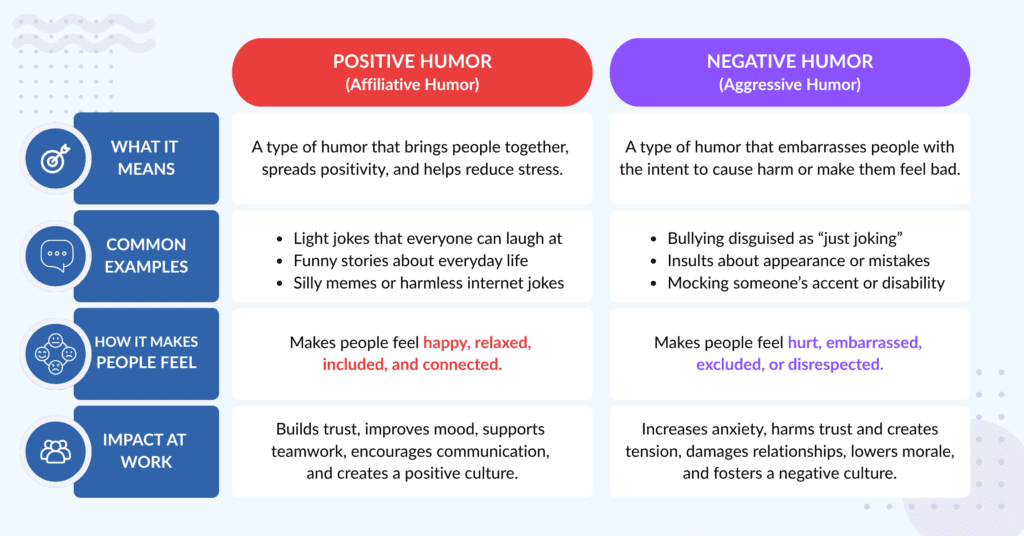
The Difference Between Positive Humor and Negative Humor and How it Affects the Workplace
Positive Humor (Affiliative Humor)
Positive humor, often called affiliative humor, focuses on bringing people together. It is warm, respectful, and enjoyable for everyone involved. It can also include self-enhancing humor, where a person uses humor to stay positive during stress or laugh at their own minor mistakes in a healthy way.
This type of humor helps create a more open and supportive workplace. It can reduce tension during busy days and make interactions feel easier.
Examples of positive humor include:
- Sharing a funny but relatable meme in the team chat
- Laughing together after a long and tiring meeting
- Playfully joking about common deadline struggles
- Laughing at your own typo or small mistake first
Negative Humor (Aggressive Humor)
Negative humor often comes at someone else’s expense. It may include sarcasm, mocking comments, ridicule, or jokes that embarrass others. While some people may see it as harmless, it can have a negative effect on mental health and relationships.
This type of humor can make employees feel singled out, excluded, or unsafe. Over time, it may damage trust and reduce team morale.
Examples of negative humor include:
- Making sarcastic comments about a coworker’s idea
- Mocking a teammate’s presentation mistake
- Teasing someone about their background
- Sharing inside jokes that leave others out
Why the Difference Matters
Humor should help people feel better, not worse. In the workplace, the best humor is the kind that creates connection, eases stress, and respects everyone involved.
How to Bring Humor to the Workplace
Humor does not need to be forced or overly planned. Small, natural moments of fun can make the workplace feel more positive and connected. The goal is to create laughter that helps people feel comfortable, included, and respected.
Encourage Lighthearted Communication
Create space for casual and friendly interactions during the workday. These moments can help employees relax and connect with one another outside of tasks and deadlines.
Simple ideas include:
- Team chat channels for memes or light content
- Weekly fun questions employees can answer casually
- Friendly inside jokes that everyone understands
- Celebrating small wins in playful ways
These ideas not only bring laughter to your team, but also help team members learn more about one another.
Use Humor in Meetings
Meetings do not always have to feel formal or tense. Adding light humor can help people feel more relaxed and engaged.
A study by Harvard Medical School found that games at work helped employees briefly detach from job duties and restore their energy levels. Here are some activities you can try:
- Starting with a fun icebreaker
- Ask everyone to share a small win from the week
- Ending with a positive or funny moment
These small touches can help people connect and participate more openly.
Lead by Example
Leaders play a big role in shaping workplace culture. When leaders use light, appropriate humor, it shows that jokes and human connection are welcome at work.
For example, a manager making a small joke about a minor mistake they made can show that nobody has to be perfect. This signals to employees that mistakes can be learning moments and can help create a more relaxed and open environment.
Leaders can model humor by:
- Laughing at small everyday mishaps
- Starting meetings with a cheerful comment
- Using humor to ease tension during busy days
- Celebrating team wins in playful ways
Keep Humor Inclusive and Respectful
A good laugh can be healthy, but not everything is funny to everyone. It is important to be thoughtful about the kind of humor used at work.
For example, avoid jokes that target personal traits, backgrounds, beliefs, or sensitive topics. Even comments meant to be harmless can hurt others or create discomfort. At the end of the day, the best workplace humor brings people together, not push them apart.
Creating Healthier Workplaces Through Humor
Laughter may seem like a small thing, but in the workplace, it can have a huge impact during stressful times: it can be a source of connection, resilience, and growth.
Of course, humor is only one part of building a mentally healthy workplace. Teams also need spaces where employees feel safe to speak up, share ideas, ask for help, and learn from mistakes without fear of judgment.
Organizations looking to build that kind of culture can turn to ElevateMinds. Through our programs such as Psychological Safety Program for Teams, ElevateMinds supports organizations in creating healthier, safer, and more connected workplaces.









Leave A Comment